
Dog crates are essential tools for training, travel, and ensuring your dog’s safety at home. However, even the most durable crate can become a hazard if not properly secured. Whether you’re using the crate at home or in a vehicle, proper setup and fastening are crucial to keeping your dog safe and comfortable.
In this guide, we’ll cover the best practices for securing a dog crate to maximize safety and prevent accidents. From choosing the right crate to properly anchoring it during travel, we’ll make sure your dog is safe no matter where you go.
Why Proper Crate Security Is Essential
An unsecured crate can lead to several safety issues:
- Sliding and Tipping: The crate may move during travel or if your dog shifts around, causing injuries.
- Breakout Risk: Improperly secured crates may allow clever dogs to force the door open or bend bars.
- Crash Hazards: During a car accident, an unfastened crate can become a projectile.
- Anxiety and Stress: A crate that wobbles or shifts can make your dog feel uneasy.
According to the Center for Pet Safety (CPS), properly secured crates significantly reduce the risk of injury during accidents.
Step 1: Choose the Right Crate for Safety
Not all crates are suitable for all situations. Choosing the right crate ensures that your dog is not only secure but also comfortable.
1. Material and Durability
- Aircraft-Grade Aluminum: Strong, lightweight, and chew-proof. Ideal for both home and travel.
- Reinforced Steel: Extremely durable but can be heavy for transport.
- Plastic Travel Crates: Suitable for air travel but may not withstand strong impacts.
- Wire Crates: Good for ventilation but prone to bending and breakouts.
Recommended Crate:
Impact Dog Crates are known for their durability and crash-tested safety. Built from heavy-duty aluminum, they resist chewing and bending, making them the ideal choice for secure containment.
Step 2: Securing Your Crate at Home
Even at home, an unsecured crate can pose safety risks, especially for strong or anxious dogs. Here’s how to properly secure your crate in your living space:
1. Positioning the Crate Correctly
- Stable Surface: Place the crate on a flat, non-slip surface to prevent tipping.
- Against a Wall: Position the crate with one side against a wall to increase stability.
- Avoid High-Traffic Areas: Choose a quiet corner to minimize stress and reduce the risk of being knocked over.
2. Use Non-Slip Pads or Mats
- Rubber or Silicone Pads: Placing these under the crate helps keep it from sliding on hard floors.
- Crate Mats with Grips: These add both comfort and stability.
3. Fastening the Crate to the Wall
- Wall Anchors: Attach the crate to the wall using sturdy brackets and bungee cords.
- Furniture Straps: These can secure the crate to adjacent walls or heavy furniture.
- Zip Ties or Bungee Cords: Connect the crate to an immovable object for added security.
Step 3: Securing Your Crate During Car Travel
Traveling with your dog requires extra precautions to ensure safety in the event of sudden stops or collisions.
1. Use Crash-Tested Crates
Not all crates are designed for travel safety. Choose crash-tested models like Impact Dog Crates that meet rigorous safety standards.
2. Position the Crate Safely in the Vehicle
- Cargo Area or Back Seat: These are the safest spots for securing a crate.
- Avoid Front Seats: Airbags can be fatal to pets if deployed.
3. Anchor the Crate Properly
- Tie-Down Straps: Use high-strength ratchet straps or bungee cords to fasten the crate to the vehicle’s anchor points.
- Seat Belt Integration: Some crates come with built-in loops for threading seat belts through.
- No Sliding: Make sure the crate is tightly secured to prevent movement during sudden stops.
4. Double-Check Stability
- Shake Test: Gently push and shake the crate to ensure it doesn’t move.
- Check Latches: Verify that all doors are securely closed and latched.
Step 4: Checking Crate Condition and Maintenance
Regular maintenance of your crate ensures it remains secure and safe over time.
1. Inspect the Crate Regularly
- Check for Loose Bolts or Screws: Tighten them as needed.
- Inspect for Rust or Wear: Replace parts showing signs of damage.
- Test Locks and Latches: Make sure they function correctly and are not easily manipulated.
2. Clean and Sanitize Frequently
- Removable Trays: Make sure they are securely locked back in place after cleaning.
- Hinges and Locks: Lubricate as needed to keep them functioning smoothly.
Step 5: Train Your Dog to Feel Secure in the Crate
A dog that is comfortable in the crate is less likely to attempt escapes or panic.
1. Positive Reinforcement
- Use treats and praise to encourage your dog to enter the crate willingly.
- Gradually increase crate time to build confidence.
2. Make the Crate Comfortable
- Add soft bedding and familiar items to reduce stress.
- Consider using a calming spray or diffuser to keep your dog relaxed.
3. Use Crate Covers Carefully
- While covering the crate can create a den-like feel, make sure there is adequate ventilation.
- Never completely cover the crate during travel, as it can cause overheating.
Why Impact Dog Crates Are the Best Choice for Safety
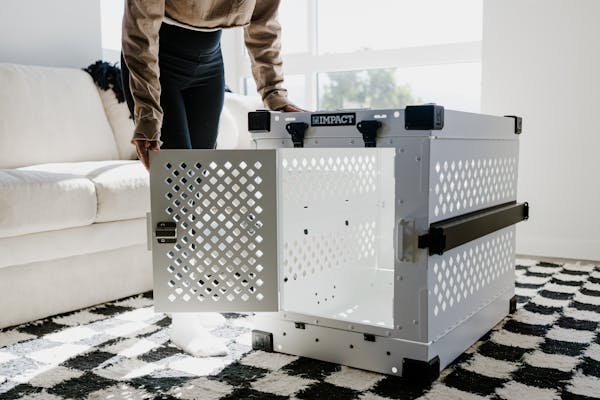
When it comes to security and durability, Impact Dog Crates stand out as the top choice. Here’s why:
1. Aircraft-Grade Aluminum Construction
- Chew-proof and nearly indestructible.
- Maintains integrity even during impact or stress.
2. Crash-Tested for Safety
- Proven to protect dogs during car accidents.
- Stable and robust, with built-in tie-down points for secure anchoring.
3. Escape-Proof Design
- Tamper-resistant latches and heavy-duty locks.
- Designed specifically to prevent breakouts, even from strong and determined dogs.
Success Story: Securing Max’s Ride
Max, a high-energy German Shepherd, had a history of breaking out of cheap crates during car rides. His owner, Lisa, decided to invest in an Impact Dog Crate after a close call where Max escaped in traffic.
With the new crate properly secured in the back of her SUV using tie-down straps, Max remained calm and safe, even during sudden stops. The durable construction and secure latches kept him contained, and Lisa felt more confident than ever while traveling.
Final Thoughts: Safety First with Proper Crate Setup
Securing your dog’s crate properly is not just about keeping them contained—it’s about ensuring their safety and well-being. Whether at home or on the road, taking the time to position and anchor the crate correctly can make all the difference.
By investing in a high-quality, escape-proof, and crash-tested crate like those from Impact Dog Crates, you’re prioritizing your dog’s safety in every situation. Follow the steps outlined in this guide to secure your crate properly and give your dog the protection they deserve.Travel with peace of mind and keep your dog safe with Impact Dog Crates—built for security, durability, and ultimate protection.
 Dog Safety Systems
Leave a comment